
Have you ever woken from a dream that felt so vivid that you wondered whether it might actually happen? You may have asked yourself, “Do dreams come true, or was my mind simply creating a powerful story while I slept?” This question becomes especially interesting when a dream feels unusually realistic, emotional, or connected to something happening in your waking life.
The spiritual meaning of dreaming about do dreams come true can be explored from several perspectives. Some spiritual traditions believe certain dreams can carry meaningful guidance or symbolism, while psychology explains many dreams through emotions, memories, expectations, and subconscious processing.
A dream can feel meaningful without necessarily predicting the future. Understanding the difference between symbolism, coincidence, intuition, and prediction can help you explore your dreams without fear.
Do Dreams Come True? Understanding the Spiritual Meaning
When people ask do dreams come true, they are often wondering whether a dream can predict something that will happen later.
From a spiritual perspective, some traditions view dreams as possible sources of insight, reflection, or guidance. Throughout history, religious and cultural traditions have included stories of meaningful dreams.
However, not every dream should be treated as a prophecy.
Sometimes a dream may seem to come true because it reflects something you were already expecting, noticing, or worrying about. Other times, similarities may simply be coincidence.
Spiritually, you can view a meaningful dream as an invitation to reflect rather than as a guaranteed forecast.
Ask yourself:
- What was the strongest feeling in the dream?
- What part of the dream stayed with me after waking?
- Is something similar already happening in my life?
- Was I thinking about this subject before going to sleep?
- What could the dream symbolize emotionally?
These questions can reveal more than trying to predict the future.
Do Dreams Come True According to Psychology?
Psychology offers several explanations for why dreams can sometimes appear to come true.
Your brain processes memories, emotions, expectations, concerns, and recent experiences during sleep. Dreams can combine these elements into unusual scenarios.
Imagine that you are worried about an upcoming conversation. You dream about having that conversation, and the next day something similar happens.
It may feel as though the dream predicted the event. However, you were already thinking about the situation, so your brain had material from which to construct the dream.
Dreams can therefore sometimes reflect expectations rather than predict events.
This does not make them meaningless. It simply means their value may come from what they reveal about your thoughts and emotions.
The Spiritual Meaning of Do Dreams Come True
The spiritual meaning of do dreams come true often centers around intuition, awareness, personal transformation, and discernment.
Some spiritual traditions believe dreams can provide insights that are difficult to notice during waking life. A dream may bring attention to a feeling, relationship, decision, or personal concern.
For example, you might dream repeatedly about being lost during a period when you feel uncertain about your future.
Rather than assuming the dream predicts a literal event, you could interpret the lost feeling symbolically. Perhaps you are searching for direction or struggling to decide what comes next.
Spiritual dream interpretation becomes most useful when it encourages self-awareness rather than fear.
Why Do Some Dreams Feel Like Predictions?
Some dreams feel remarkably realistic.
You might dream about a person, location, conversation, or event and later encounter something that reminds you of the dream.
There are several possible explanations.
Your brain may have noticed patterns you were not consciously focusing on. Your expectations may have influenced the dream. The event may have been reasonably predictable. Or the similarity may simply be coincidence.
There is also a psychological tendency to remember the dreams that appear to match later events while forgetting the countless dreams that never resemble reality.
This can make a rare coincidence feel much more significant.
Do Dreams Come True Because of Intuition?
Some people believe dreams can reveal intuition.
Intuition can be understood as a feeling or impression that arises from information your mind has processed without conscious analysis.
For example, you may dream about someone you have not spoken to recently because subtle memories or emotions connected with that person remain active in your mind.
From a spiritual perspective, someone might describe this as intuition or inner guidance.
From a psychological perspective, it could be unconscious pattern recognition.
You do not necessarily have to choose one interpretation. You can treat the experience as an opportunity to understand what your mind and emotions may already be noticing.
Do Dreams Come True Spiritually?
Many spiritual traditions give dreams special importance.
Dreams appear in religious stories and cultural traditions around the world. Some communities understand certain dreams as meaningful experiences connected with faith, intuition, ancestors, or spiritual reflection.
However, spiritual interpretations vary widely.
A dream should not automatically be considered a supernatural message simply because it feels vivid.
If you are spiritually inclined, you might respond by praying, reflecting, journaling, or discussing the dream with a trusted spiritual person.
The focus can remain on wisdom and discernment rather than certainty.
Common Dreams That Seem to Come True
Certain dream experiences are especially likely to make people wonder whether dreams predict reality.
Dreaming About Someone Calling You
You might dream about someone and then receive a message from them later.
This can feel mysterious, especially if you had not spoken recently.
However, relationships create many expectations and memories, making such coincidences possible.
Dreaming About an Event
You may dream about an upcoming event and later experience something similar.
If the event was already planned, your mind had plenty of information to construct the dream.
Dreaming About a Place
A dream location may later resemble somewhere you visit.
Sometimes your brain combines visual memories from different places to create a setting that feels new but familiar.
Dreaming About a Conversation
Dreaming about a conversation that later happens may reflect your expectations about what someone might say or how an interaction might unfold.
Spiritual Meaning of Recurring Dreams
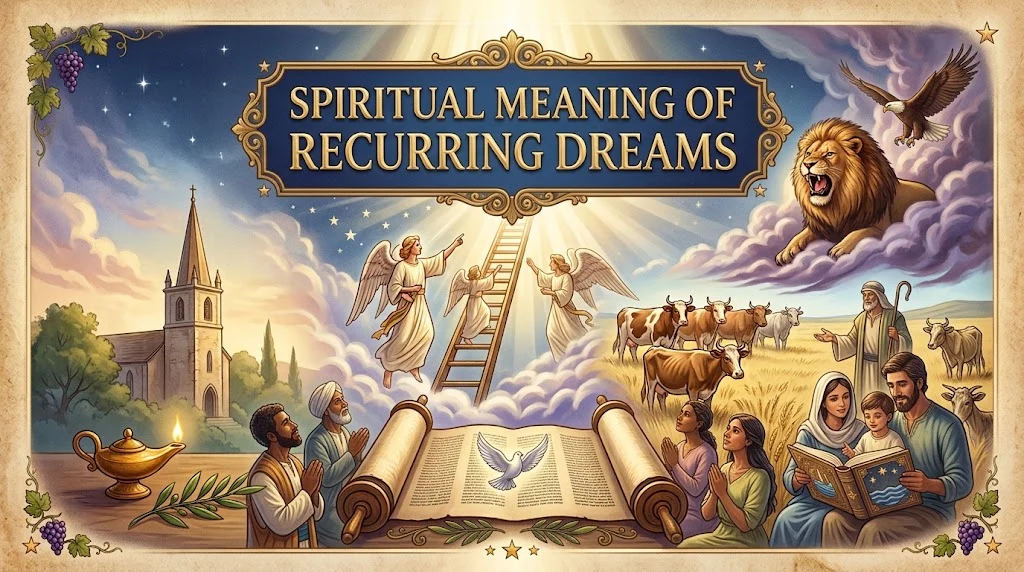
Recurring dreams can feel particularly significant.
If the same theme appears repeatedly, consider what emotion or life situation may be behind it.
A recurring dream about falling might symbolize uncertainty or lack of control for some people. A recurring dream about searching might represent a desire for direction. A recurring dream about water might connect with emotional change or renewal.
These are possibilities rather than universal definitions.
Spiritually, recurring dreams can be viewed as invitations to pay attention.
Psychologically, they may reflect unresolved concerns or repeated emotional patterns.
Keeping a dream journal can help you identify what changes between dreams and what remains consistent.
Do Dreams Come True and Emotional Blockages?
Some spiritual frameworks suggest that dreams can reveal emotional blockages.
An emotional blockage is a spiritual or reflective concept rather than a scientific diagnosis. It describes feelings that may be difficult to express, process, or release.
For example, if you repeatedly dream about being unable to speak, you might reflect on whether you feel unheard in waking life.
If you dream about being trapped, you might ask whether something in your life currently feels restrictive.
If you repeatedly dream about losing something, you could explore whether you are worried about change or separation.
The dream does not prove that a blockage exists. Instead, it can provide a symbolic starting point for reflection.
Do Dreams Come True and Chakra Symbolism?
Some spiritual approaches connect dreams with chakras. Chakras come from spiritual traditions and are not scientifically established physical structures, so they are best used as a symbolic framework rather than a medical explanation.
Different chakras are traditionally associated with different areas of experience:
- Root chakra: security and stability
- Sacral chakra: emotions and creativity
- Solar plexus chakra: confidence and personal agency
- Heart chakra: compassion and relationships
- Throat chakra: communication
- Third-eye chakra: intuition and insight
- Crown chakra: spirituality and connection
If your dreams frequently involve communication, you might reflect on whether you have something you need to express.
If they involve fear or instability, you could reflect on where you need greater emotional security.
Cultural Interpretations of Dreams Coming True
Different cultures have developed their own explanations for meaningful dreams.
Some religious traditions describe dreams as possible spiritual experiences. Other cultural traditions associate dreams with ancestors, intuition, warnings, community beliefs, or emotional messages.
Modern psychology offers another perspective, focusing on memory, emotion, expectation, and subconscious processing.
None of these frameworks needs to be treated as the only possible explanation.
Understanding the cultural background of a dream can help you appreciate why the same experience may be interpreted differently by different people.
Dreaming About the Future
Dreaming about a future event can feel exciting or unsettling.
Suppose you dream about graduating, moving somewhere new, meeting someone, or beginning a new chapter. You may wonder whether the dream is showing you what will happen.
A more grounded approach is to consider what the event represents.
A dream about moving might symbolize independence or change.
A dream about graduation might represent achievement or transition.
A dream about meeting someone might symbolize your hopes for connection.
The symbolic meaning may matter more than whether the event literally occurs.
Do Dreams Come True After Thinking About Something?
This is one of the most common reasons dreams appear predictive.
If you spend hours thinking about an event before sleeping, your brain has plenty of material to incorporate into dreams.
For example, if you are preparing for an exam, you might dream about taking the test.
If you are worried about a conversation, you might dream about talking to that person.
If you are excited about a trip, you might dream about arriving at the destination.
The dream may reflect how important the event feels to you.
Real-Life Example: Dreaming About an Exam
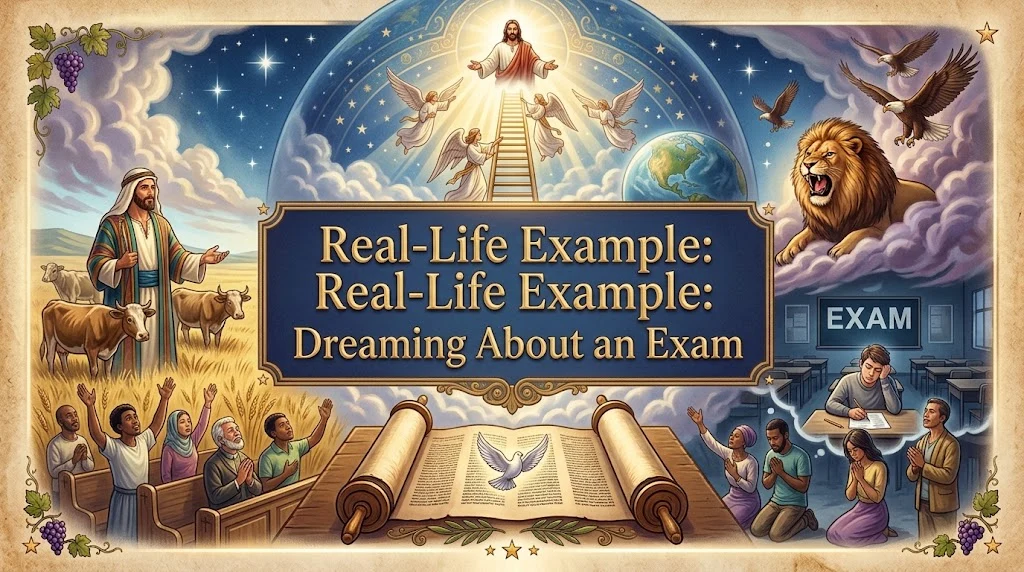
Imagine a student who is nervous about an upcoming exam.
The night before, they dream that they are sitting in the classroom and answering questions.
The next day, they take the exam in the same room.
It might seem like the dream came true, but the event was already expected.
Psychologically, the dream likely reflected anticipation and stress.
Spiritually, the student could interpret the dream as an invitation to recognize their anxiety and prepare calmly.
Real-Life Example: Dreaming About a Friend
Imagine someone dreams about an old friend they have not spoken to for months.
The next day, the friend sends a message.
This can feel like an extraordinary coincidence.
It may be tempting to conclude that the dream predicted the message. However, many possibilities exist. The friend may have already been on the person’s mind, or the timing may simply be coincidental.
Spiritually, the experience could still encourage reflection on the importance of the friendship.
Real-Life Example: Dreaming About Change
Imagine someone repeatedly dreams about moving to a new house.
They are not actually planning to move, but they have been feeling dissatisfied with their routine.
The dream might not predict a physical move.
Instead, the house could symbolize their sense of self, comfort, identity, or life circumstances.
The recurring dream may encourage them to consider what kind of change they want in waking life.
How to Understand Whether Your Dream Has Meaning
If you are wondering do dreams come true, start by separating prediction from symbolism.
Write down the dream as soon as possible.
Then ask:
What Was I Feeling?
Emotion is often more informative than individual dream details.
What Was Happening in My Life?
Look for connections with current relationships, decisions, worries, or changes.
Did I Expect the Event?
If you were already expecting something, the dream may have reflected anticipation.
Is There a Symbolic Meaning?
Think about what the main event or object represents to you personally.
Did the Dream Repeat?
Recurring themes may deserve additional reflection.
Am I Looking for Confirmation?
Sometimes we naturally notice evidence that supports something we already believe.
Being aware of this can help you interpret dreams more thoughtfully.
FAQs
1. Do dreams come true in real life?
Sometimes dreams may appear to come true because they reflect events you already expected, concerns you were processing, or situations that were reasonably predictable. Coincidences can also create striking similarities. There is no reliable basis for assuming that every dream predicts the future.
2. Can dreams predict the future spiritually?
Some spiritual and religious traditions believe certain dreams can be meaningful or prophetic. However, individual dreams should not automatically be treated as predictions. Spiritual interpretation is best approached with reflection and discernment.
3. Why did I dream about something that happened the next day?
Your brain may have already been processing information related to the event. You may also have expected the event, making it natural for it to appear in a dream. Sometimes the similarity may simply be coincidence.
4. What does it mean when the same dream keeps happening?
Recurring dreams may reflect ongoing emotions, stress, unresolved concerns, or major life changes. Spiritually, some people view recurring dreams as invitations to pay closer attention to a particular area of life.
5. Should I make decisions based on my dreams?
Dreams can be useful for reflection, but major decisions should not depend on dreams alone. Consider real-world information, your values, trusted advice, and the practical consequences of your choices.
Conclusion: Do Dreams Come True or Reveal Something Deeper?
So, do dreams come true? Sometimes a dream may appear to match a later event, but that does not necessarily mean it predicted the future. Expectations, memories, intuition, coincidence, and subconscious processing can all contribute to dreams that later seem surprisingly accurate.
From a spiritual perspective, a powerful dream can still have value even when it is not a prediction. It may encourage you to examine your emotions, listen to your inner concerns, reflect on your faith, or recognize changes taking place in your life.
Instead of becoming anxious about whether a dream will literally happen, consider what the dream might be showing you about your present experience.
Write it down. Notice the emotions. Look for patterns. Reflect on your circumstances. Give yourself permission to remain curious without demanding certainty.
A meaningful dream does not have to predict tomorrow to teach you something about today.