Have you ever had a dream that later seemed to happen in real life?
Maybe you dreamed about meeting someone and then unexpectedly crossed paths with them days later. Perhaps you dreamed of a specific situation, only to experience something surprisingly similar afterward. Experiences like these often leave people asking a fascinating question:
Do dreams come true?
For centuries, people around the world have wondered whether dreams can predict future events, reveal spiritual messages, or provide guidance about life’s journey. Some believe dreams are purely products of the subconscious mind, while others see them as meaningful signs connected to intuition, spirituality, and higher awareness.
The spiritual meaning of dreaming about do dreams come true goes beyond simple predictions. Dreams often reflect our emotions, fears, hopes, personal growth, and spiritual development. In some cases, they may offer insights that help us prepare for future opportunities or challenges.
In this guide, we’ll explore the spiritual, psychological, and cultural perspectives on whether dreams come true and what your dreams may be trying to tell you.
Spiritual Meaning of Dreaming About Do Dreams Come True
From a spiritual perspective, dreams are often viewed as messages from the deeper self.
Rather than predicting exact future events, dreams frequently reveal:
- Hidden emotions
- Intuitive insights
- Spiritual lessons
- Personal growth opportunities
- Unconscious fears
- Life direction
Many spiritual traditions teach that dreams connect us with wisdom that is not always accessible during waking life.
Sometimes dreams feel prophetic because they reveal possibilities already developing beneath the surface.
The dream may not create the future, but it may help you recognize what is already unfolding.
Do Dreams Really Come True?
The answer depends on how we define “come true.”
Most dreams do not unfold exactly as they appear.
However, dreams can sometimes:
- Reflect future possibilities
- Reveal intuitive insights
- Highlight emotional truths
- Prepare us for change
- Bring attention to important situations
For example, a dream about moving to a new place may not literally predict a move, but it could symbolize upcoming life changes or personal growth.
The symbolic message is often more important than the literal details.
Psychological Perspective on Dreams Coming True
Psychologists generally view dreams as a way for the brain to process information.
While dreams may not predict the future, they can identify patterns and possibilities that the conscious mind has not fully recognized.
Your subconscious constantly gathers information from:
- Experiences
- Emotions
- Relationships
- Observations
- Memories
Because of this, dreams may sometimes seem predictive.
In reality, the subconscious may have noticed clues that later become significant.
This can create the feeling that the dream “came true.”
Can Dreams Predict the Future?
This question has fascinated humanity for thousands of years.
Spiritually, some people believe certain dreams carry intuitive or prophetic qualities.
These dreams often feel different from ordinary dreams.
Common characteristics include:
- Exceptional clarity
- Strong emotions
- Vivid details
- Lasting impact
- A sense of importance
Even so, most spiritual teachers encourage interpretation with balance and wisdom.
Dreams are generally seen as guidance rather than guarantees.
Types of Dreams That Seem to Come True
Not all dreams feel the same.
Some dream experiences are more likely to leave a lasting impression.
Intuitive Dreams
These dreams seem to provide insight into future possibilities.
They often arise during periods of reflection or spiritual growth.
Symbolic Dreams
Rather than predicting events, symbolic dreams reveal emotional or spiritual truths.
Recurring Dreams
Repeated dreams often point toward important lessons or unresolved issues.
Visitation Dreams
Some people describe dreams involving loved ones who have passed away.
These experiences are often deeply meaningful and emotionally powerful.
Problem-Solving Dreams
Sometimes the subconscious works through challenges while we sleep, leading to insights that help us later.
Cultural Interpretations of Whether Dreams Come True
Different cultures have long explored the relationship between dreams and reality.
Biblical Perspectives
Many biblical stories include dreams that provided guidance, warnings, or spiritual insight.
These dreams often carried symbolic meaning rather than literal predictions.
Islamic Perspectives
In Islamic traditions, some dreams are considered meaningful spiritual experiences that encourage reflection and wisdom.
Not every dream is viewed the same way, and discernment is emphasized.
Ancient Egyptian Beliefs
Ancient Egyptians often regarded dreams as messages from the divine realm.
Dream interpretation was an important spiritual practice.
Eastern Philosophies
Many Eastern traditions view dreams as reflections of karma, consciousness, intuition, and personal growth.
Dreams are often seen as opportunities for self-understanding.
Modern Spiritual Views
Today, many people believe dreams can provide intuitive guidance while still recognizing the role of the subconscious mind.
Connection Between Dreams and Chakras
Some spiritual traditions connect dreams to energetic activity within the chakra system.
This perspective can offer additional insight into dream experiences.
Third Eye Chakra
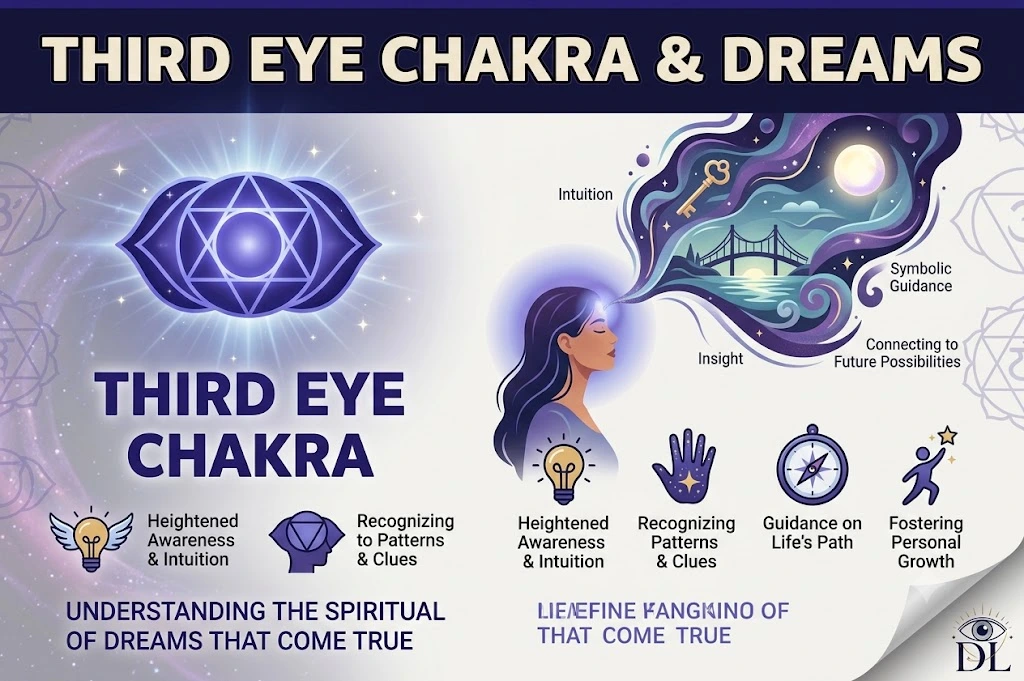
The Third Eye Chakra governs:
- Intuition
- Insight
- Awareness
- Inner wisdom
Many vivid and meaningful dreams are associated with this energy center.
When balanced, intuition may feel stronger and clearer.
Crown Chakra
The Crown Chakra relates to:
- Spiritual connection
- Higher consciousness
- Divine wisdom
Dreams involving spiritual guidance often connect to this chakra.
Heart Chakra
The Heart Chakra governs:
- Compassion
- Love
- Emotional healing
Many dreams that later seem meaningful are connected to emotional growth and healing.
Root Chakra
The Root Chakra governs:
- Stability
- Security
- Grounding
Dreams about future concerns may arise when this chakra seeks greater balance.
Emotional Blockages Revealed Through Dreams
Dreams frequently highlight emotions that require attention.
Fear of the Unknown
Dreams often emerge when we feel uncertain about the future.
Unresolved Emotions
Past experiences may continue influencing present thoughts and feelings.
Lack of Trust
Some dreams encourage greater confidence in intuition and inner wisdom.
Resistance to Change
Dreams frequently appear during periods of transition.
Need for Healing
The subconscious naturally seeks balance and emotional resolution.
Understanding these emotional patterns can reveal deeper dream meanings.
Real-Life Examples of Dreams That Seemed to Come True
Example 1: The New Opportunity
A woman dreamed about receiving a key.
Weeks later, she was offered a new job that transformed her career.
The key symbolized opportunity and access to a new chapter.
Example 2: Reconnecting With an Old Friend
A man dreamed about a childhood friend he hadn’t seen for years.
A few days later, they unexpectedly reconnected online.
Whether coincidence or intuition, the experience felt meaningful.
Example 3: Preparing for Change
A student repeatedly dreamed about crossing a bridge.
Months later, she moved to another city for university.
The bridge symbolized transition and growth.
Example 4: Emotional Healing
A woman dreamed of calm water after a difficult breakup.
Soon afterward, she noticed significant emotional healing and peace.
The dream reflected an internal transformation already underway.
How to Reflect on Dreams That Feel Significant
If a dream feels important, consider asking yourself:
- What emotions stood out most?
- What symbols appeared repeatedly?
- Does the dream connect to current life circumstances?
- What lesson might the dream contain?
- What intuitive feeling remains after waking?
Keeping a dream journal can help identify patterns over time.
Many meaningful insights emerge through consistent reflection.
FAQs
1. Do dreams really come true?
Some dreams seem to align with future events, but most are understood as symbolic reflections of emotions, intuition, and personal growth.
2. Can dreams predict the future?
Some people believe certain dreams contain intuitive insights, though most dream interpretations focus on symbolism rather than exact predictions.
3. Why do some dreams feel so real?
Vivid dreams often involve strong emotions, making them more memorable and impactful.
4. What should I do if I have a dream that feels important?
Reflect on the symbols, emotions, and personal circumstances connected to the dream.
5. Are recurring dreams significant?
Yes. Recurring dreams often highlight lessons, emotions, or issues that need attention.
Conclusion
The spiritual meaning of dreaming about do dreams come true reminds us that dreams are powerful tools for self-discovery, intuition, and personal growth.
While dreams do not always predict future events, they often reveal emotional truths, spiritual lessons, and possibilities that deserve attention. They encourage us to listen more closely to our inner wisdom and become more aware of the patterns unfolding in our lives.
Rather than asking whether every dream will come true, it may be more helpful to ask what the dream is teaching you. The answers often reveal valuable insights about your emotions, relationships, goals, and spiritual journey.
Approach your dreams with curiosity, reflection, and an open mind. Sometimes the greatest gift a dream offers is not a prediction but a deeper understanding of yourself.